



Welcome to The Forever Workshop’s MFA Newsletter. Today, enjoy an interview with Elizabeth DeMeo, former Tin House editor, about entering the publishing world post-MFA.
Everything published here is free to enjoy, courtesy of our partnered universities. (Not interested? Turn off emails from this column here.)
Justine: I remember when I was interviewing for the Tin House editorial internship, you expressed that you felt your MFA was invaluable in helping you step into the roles you wanted to professionally. Can you first share a bit about your decision to pursue an MFA, including why you chose the University of Arkansas?
Elizabeth: My path to an MFA program was unconventional. I didn’t realize until several years after college that I had an interest in writing, so it was a big change involving a steep learning curve to pursue an MFA. I was pretty into theater and film at that time, so I initially considered studying screenwriting, but ultimately went with fiction because I wanted to learn a broader set of craft techniques.
I chose the University of Arkansas because it was a fully funded program and (at least according to the list I was following at the time) the highest ranked program that admitted me. I’m not sure I chose it for this reason, but it was also helpful that the Arkansas MFA is four years long. Since I had very little experience with creative writing, I needed every minute of instruction I could get.
I was initially waitlisted at Arkansas, which I mention because I want to reduce stigma around this subject. In my opinion, admissions results don’t indicate much about your potential as a writer. Your willingness to learn, to work hard, and to commit to your craft is what’s most important.
Justine: What experiences did you have during your MFA that helped you feel prepared to step into an editorial role at a publishing entity like Tin House?
Elizabeth: The reading I did (both in and outside of class) formed the bedrock of my editorial sensibilities. I learned a lot about what I like in contemporary nonfiction by reading work from Wendy S. Walters, Amy Fusselman, Maggie Nelson, Jeannie Vanasco, Angela Pelster, Elissa Washuta, Jenn Shapland, and Elena Passarello, among others. I believe there is a clear line from writing by these authors to Shze-Hui Tjoa’s The Story Game, a wonderful memoir I acquired and edited at Tin House.
In fiction, my professor Padma Viswanathan assigned us Barbara Gowdy’s The White Bone, which made me fall in love with writing from animal perspectives. Again, there’s a clear line from this assigned book to another book I acquired and edited at Tin House: Talia Lakshmi Kolluri’s amazing story collection What We Fed to the Manticore.
During my first summer in Fayetteville, I met my partner, Anthony Blake, a poet who was a year ahead of me in the MFA program. He had some indie press experience because he’d previously worked at Sarabande Books, and he began to share what he knew with me. Those conversations were my introduction to the publishing world, and then I learned more while working in various capacities for the Arkansas International, our MFA program’s literary magazine. Writing book reviews and interviewing authors, as I did for Ark Int, is something I’d encourage any MFA student to do.
The final experience that really prepared me to work in publishing was an editorial internship with Tin House itself. Through the internship, I learned quite a bit about what an editor does and how I could hone my skills to that end, and also became more familiar with the Tin House list. Having a clear understanding of the press’s mission and the types of books they publish was essential when I began working there full-time during the last semester of my MFA program.
Justine: Many people pursue an MFA in creative writing because they want to be a published, successful author, but of course that’s not a guaranteed outcome for everyone. How do you think students can maximize their experience in an MFA program, not just for improving their writing but to develop themselves for professional opportunities as well?
Elizabeth: If your MFA program has a literary magazine, join the staff. Try to gain not only editorial experience but also hard skills like copyediting, proofreading, layout, and design. Publishing reviews and author interviews, as I mentioned above, is immensely helpful, whether you do so in your MFA’s lit mag or elsewhere.
Additionally, use summers or any semester where you have the bandwidth to intern in the publishing industry. Don’t feel limited to just working at a press; an internship at an agency or literary arts organization can be incredibly valuable. If you can’t find those kinds of positions, working at a local bookstore is a great first step toward a job in publishing.
Once you begin publishing your own work, make a website so agents and editors can find you. Ask your MFA faculty about scheduling agent and editor visits if your program doesn’t already offer those.
Justine: You’re now teaching creative writing at Towson University. Do you feel like your MFA experience remains relevant in this role?
Elizabeth: Yes, absolutely. I taught composition classes for the first two years of my MFA, and during the first semester everyone in my cohort took a pedagogy class. Though not directly related to creative writing, these experiences helped me understand who I am as a teacher and what’s important to me in the classroom.
Later on in the MFA, I was the director of a program called Arkansas WITS (Writers in the Schools), which was my first experience teaching poetry. As a WITS instructor, you learn a few simple, straightforward rules to share with students as they write poems, and though I have some other tricks up my sleeve now, I still often think about the wisdom of the WITS maxims.
I also learned so much from my MFA professors Padma Viswanathan and Toni Jensen that I try to pass on to my students: specific ways of thinking and speaking about craft, exercises for improving your writing, and best practices during a workshop, among other lessons. Padma and Toni also, of course, introduced me to many of my favorite books and authors, and it’s a joy now to be able to teach some of those same books and authors to my students. This semester, for instance, I taught Rachel Cusk’s Outline, a book I read and loved deeply in a class with Padma.
Justine: For MFA hopefuls—what advice would you offer them, whether related to their goals of being an author or a publishing professional?
Elizabeth: I believe that what I said above is the best advice I can offer: MFA admissions results don’t indicate much about your potential as a writer. Your willingness to learn, to work hard, and to commit to your craft is what’s most important.
More concretely, I read MFA vs NYC before deciding to attend an MFA program and remember finding it useful. I’d also ask to have a call with a current student (or do a campus visit, if possible) to learn more about an MFA program before accepting their offer of admission. Unless you’re independently wealthy, make sure there’s stable funding for your program.
To learn more about the publishing industry in the United States, specifically from the mid-20th century onward, I’d suggest reading Dan Sinykin’s Big Fiction. To learn more about contemporary independent presses, I’d study their online catalogs. The Authors Guild has information on subjects like contracts and copyright if you want to better understand them as a publishing professional or an author yourself.
If you want to learn more about literary magazines, I’d spend some time looking through the curated Chill Subs lists. I’ve been recommending these lately to students who are just starting to send out work for publication, and I don’t know of a better way to broaden your horizons in the lit mag world.
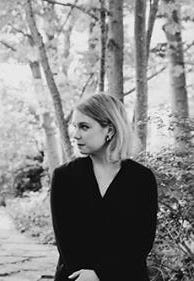
Elizabeth DeMeo is a writer and a former editor at Tin House, where she acquired and edited books of fiction and literary nonfiction. Originally from New Hampshire, she holds an MFA in fiction from the University of Arkansas, where she was Managing Editor of the Arkansas International and Director of the Arkansas Writers in the Schools program. She currently teaches creative writing at Towson University in Maryland.

Entering the “real world” can be scary! Share this with your MFA friends to help them prep for post-grad life.
https://substack.com/@mammadhayati/note/c-263403561?r=8gzobt
I never pursued an MFA, but sometimes I wonder where I'd be if I'd done that in the early 2000s when I was unmarried and had some time ahead of me. Thanks for sharing this experience. www.writeradvice.com